
A Lesbian’s Adventure Across Canada’s Uncivil Service
- Nina Tryggvason
- Apr 18
- 13 min read
Updated: Jul 21
By Nina Tryggvason

I did not want a government career. I ended up with one anyway — a second-generation civil servant, following my father into the machinery of the Canadian state. What I could not have anticipated was that the institution I spent nearly three decades navigating would, in the end, do something more disorienting than anything its managers or harassers ever managed: it would erase the language I needed to describe myself.
But I am getting ahead of the story. To understand what Bill C-16 did to women like me, you need to understand what the federal public service was already doing to women like me — long before gender identity became a protected ground.
The service that was never civil
I first applied to the federal government in 1992, to the CBC. My resume was rejected in a week. I applied again on CBC’s application form, where in the Employment Equity page, I checked "woman," skipped disabled, visible minority and indigenous, but added in "sexual orientation" next to a blank field, checked "lesbian," and waited. Six months passed before a rejection letter arrived. Make of that timeline what you will.

The 1990s were a transitional period. A hiring freeze occurred as a result of the human rights case for women to have equal pay, while a Supreme Court case extended to homosexual employees the same benefits previously reserved for heterosexual ones. The federal government’s purge of gay and lesbian public servants — which had begun in the 1950s — formally ended in 1992. Progress, of a kind. But the culture of the civil service was not rewritten by a court ruling.
Did you know that the "T" in "LGBT Purge" is a retroactive inclusion? "The former Federal Government policy that is now called the 'LGBT Purge' was not called that at the time. Terms that are now considered offensive, such as homosexual and sexual deviate, were in use to describe the targets. Lawyer Douglas Elliott chose the term LGBT Purge to describe the policy and events as it was fairly accurate, inoffensive and was intelligible in both official languages." —From the FAQs page of the LGBT Purge Fund website.
In 1999 I had written the clerical exam and been invited to interviews. Over the next 13.5 years, I would be involved in approximately 700 job processes — exams, interviews, rejections — across virtually every federal department operating in the Lower Mainland.
I received term employment in Revenue Canada's mailroom. I filed my first government grievance for sexual harassment by an permanent employee with a known history of this behaviour. I was moved to the Investigations Division in a different building.
While at Revenue Canada, I helped found the Gay and Lesbian Employee Committee — not the "Gay and Lesbian Employee Support Committee," as management preferred, a distinction that took months of argument to win. We were the first civil service employees to march in a Pride parade in 1999, and we marched afraid — afraid to be identified as government workers by our lesbian and gay communities.
Clip from Rogers Community Television broadcast of the 1999 Vancouver Pride Parade.
The crowd went silent when they saw the Revenue Canada banner. Who wants to cheer for taxes? But, when the shock wore off, they applauded. We were gay and lesbian government employees, an accepted, recognized community. I carry that moment with me. It matters to what comes later.
In 2023, John Hannaford, then Clerk of the Privy Council, proudly posts on X about marching in Ottawa's Capital Pride Parade.
The years that followed were a catalogue of institutional failure. I became indeterminate – permanently employed in 2000 with the RCMP. There was I was bullied by heterosexual women — conduct that would later fall below the threshold for any of the class actions brought by women who worked there.
I received an acting assignment at Indian and Northern Affairs but was returned to the RCMP after writing a report on systemic bigotry in the corporate culture, as requested by the associate regional director, Wendy Grant-John. Apparently, honesty about corporate culture ends acting assignments. Power says you can speak truth to it, but woe to those who do.
In 2007 while at Industry Canada, another purge of the civil service began (one that has yet to be recognized as the second LGB purge). I was was assigned to maintaining the departmental demographic analysis spreadsheet — a document which I would I would later understand was used to identify (target) LGB and other employees. Then I was workforce adjusted, and landed at the Immigration and Refugee Board. A stint at Service Canada followed. And then I made a terrible decision, when, in 2009, I accepted a promotion at Transport Canada.

https://youtu.be/wuBVkSaaZnA?si=eVZXR7MukOtFc7Y5 Corporate video: The Transport Canada Employee Experience, June 2025
While at this most toxic of workplaces, my benefits status was mysteriously changed to "single" — despite my having been in a same-sex marriage throughout my government career. I was assigned work below my classification, denied acting supervisor opportunities given to others at my level, assigned work no one else wanted, and was expected to graciously participate in my own harassment. My options to transfer were blocked. I put in writing to the unit manager that death felt like the only escape. Notes from my doctor were ignored.
I filed grievances, beginning with the lack of a work description, to naming individual higher-ranked officers and managers for bullying and poor conduct during investigations and internal hearings of my concerns. (The inherent conflict of interest—having managers named in my complaints oversee these processes—did not appear to be a concern in subsequent reviews by Health Canada or Labour Canada [Human Resources and Skills Development Canada - HRSDC)]. I filed a notice of refusal to work under Canada Labour Code Part 2 but continued to report to my workplace [cubicle] while waiting for it to be processed.
The Transport Canada Occupational Health and Safety director at Ottawa Headquarters instructed the Vancouver office to send me home. They did not do this. Instead, my unit manager asked to me to go to the regional director general’s office. I did. And then in came two Vancouver City Police. They said they would be taking me to St. Paul’s hospital for psychiatric assessment due to having cited suicidal and violent thoughts when I filed the grievances.
Rather than being handcuffed and frog-marched in front of my colleagues, I was able to convince them to let me return to my workstation to advise my Health Canada counsellor that I would not be making our appointment that day, and to gather my possessions. I also emailed my union representative, who was unsuccessful in stopping the police. I later learned through an access to information request that Health Canada had coordinated my removal with Transport Canada. Health Canada had investigated and ordered Transport Canada to report my allegation of violence and danger in the workplace. Transport Canada ignored that order. Instead, I was used as a warning to other employees to not assert one's rights, to not file grievances, and to fully participate in one's own workplace harassment.

"We take pride in fostering an equitable workplace where employees feel welcome, connected and valued. Through initiatives, such as employee-led networks, Transport Canada strives to provide a positive and inclusive environment where every employee feels their voice, views, values and life experiences are respected and heard." —Transport Canada
Human Resources and Skills Development Canada conducted a hearing and despite a note supporting my claim from the employee who benefited from my being bullied, they bizarrely decided that I had not provided enough proof of harm. Transport Canada denied there was a danger, which begs the question, then, of their involving the police.
I attempted to file with the BC Human Rights Commission, but they would not accept a complaint owing to my employer being federal.
I filed with the Federal Human Rights Commission against the workplace bullying, against managers being in charge of investigations and hearings against them, as well as the use of police in managing federal government grievances. A ten-year process of delay ensued, during which time I received a letter that did not conform to federal correspondence guidelines, and that threw my own words back at me when advising me that the commission would not proceed until I "felt like an adult again."
I went to Federal Court, then Federal Appeals Court in 2021 where I appeared for 19 minutes via Zoom to make my case. The reasons for judgement dismissing my case were delivered via email so soon after my appearance, it felt like they had been written before my hearing.
I filed several times with the Supreme Court, adding to the action the Public Service Union for failing to protect me, as well as the government’s insurance companies for continuing the harassment. Despite filing several times, the Supreme Court declined to hear my case in December 2024.
I had exhausted every formal mechanism the state offers for redress and compensation for the discrimination I experienced — as a woman, as a same-sex married lesbian, becoming disabled as a result of federal employment, and for having no protection as an atheist (I was subjected to religious bias and anti-lesbian views throughout my federal career, but most directly and openly at Transport Canada).
It had all been a futile effort to report bullying at one federal workplace to another, where bullying is the corporate culture. In the end, it was all for nothing — leaving me feeling reduced to nothing.
I tell this history not to rehearse grievance, but because it is the ground on which everything that follows stands.
I know what it costs to fight institutions from inside them. I know the difference between policy that protects and policy that performs. And I know, from long experience, when language is being weaponized against the people it purports to serve.
When the words stopped meaning what they meant
The entrenchment of the of the Canadian Charter of Rights in Freedoms in 1982 strengthened equality rights, especially through Section 15, which guarantees equality before and under the law without discrimination based on sex (among other grounds). Although same-sex relationships were no longer criminalized, discrimination against lesbians and gay men in housing, services, and employment remained legal in many jurisdictions. Lesbians, along with gay men, went to human rights commissions and courts to win rights on par with heterosexuals.
In 2019, two years after Liberal Bill C-16 added "gender identity" and "gender expression" to the Canadian Human Rights Act and to the Criminal Code's hate crime provisions, I began to understand what had been done. The government had framed the Bill as an extension of rights to a vulnerable population. What it actually did was introduce a legal framework in which sex — biological, observable sex — could be superseded by a self-declared "identity." And in doing so, it quietly dismantled the language that lesbians, in particular, had fought for decades to establish.
The word "woman" had a meaning. The word "lesbian" had a meaning — a female homosexual, a woman whose sexual orientation is toward other women. Same-sex marriage, won through years of legal struggle, referred to the sex of the parties, not their self-image. These were not arbitrary terms. They were the legal and social infrastructure of our rights.
Justin Trudeau in 2023 — Using his social media platform to remind citizens that the word "woman" no longer meant what it used to mean and to threaten those who took issue with the rewrite.
When "gender identity" displaced "sex" as the operative category, those words did not disappear. They were hollowed out. A "woman" could now mean anyone who identified as one. "Lesbian" could be applied to males who self-identified as women. Same-sex marriage could be reframed to include opposite-sex couples where one partner identified otherwise. The words remained; the meanings were gone.
If UN Women says it, it must be true?
"UN Women exists to advance women’s rights, gender equality, and the empowerment of all women and girls. As the lead United Nations entity on gender equality, we shift laws, institutions, social norms, and services to close the gender gap and build an equal world for all women and girls. We keep the rights of women and girls at the centre of global progress—always, everywhere."
I wrote to then-Governor General Julie Payette regarding what I saw as the egregious erosion of our language. Four letters before her office replied — advising me that the Governor General’s office was not responsible for civil service work-life balance. I responded to point out that public service employees are, technically, "servants of the Crown," and that, as the Crown’s representative in Canada, this matter was within the Governor General’s purview. (I also, in passing, advised Rideau Hall staff that if Payette was creating a toxic work environment, they should file grievances. Within weeks, many did. Payette resigned in disgrace.)
Governor General Mary Simon has not replied to my letters.
His Majesty King Charles III did reply to my correspondence, within six months, advising that he was unable to direct his various Prime Ministers to govern within the realm of reality. I had raised, among other things, that "they/them" pronouns sit in grammatical tension with the "Royal We" — in which only the monarch is addressed as a plural — and that gender ideology creates a peculiar asymmetry in law: peasants may self-identify into the opposite sex, but no amount of self-identification allows nobility to claim or renounce inherited titles. The King's best wishes were conveyed.
I am not being flippant. I am describing the actual texture of trying to raise a serious legal and linguistic problem with institutions that have decided the problem does not exist.
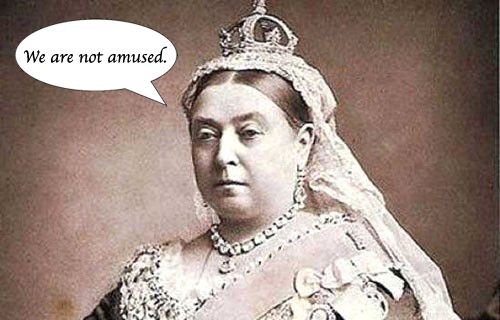
The letters no one wanted to receive
My response to all of this was to write. Systematically, persistently, to every level of government I could reach.
To every Education Ministry across Canada: as a former regional security officer, I advised that eliminating sex-segregated bathrooms and changing rooms invites the assault of girls. I noted the peculiar double standard in which schools are expected to present evolution and religious belief as equally valid positions — yet gender ideology is not offered the same optional status as biology.
To every Ministry of Justice across Canada: as a former RCMP forms and workflow analyst, I advised that permitting individuals to use any pronoun they choose undermines data integrity across the justice system. A witness can only report what they observed — the physical characteristics of a suspect. They cannot report a suspect's self-image. Missing persons reports become inaccurate when self-described identity conflicts with observable description. Women who have been sexually assaulted are being required to affirm the sexual self-image of their attackers in testimony, or risk being accused of a form of perjury under compelled speech provisions.
To the RCMP and BC Public Safety and Justice Ministers: that the recent Tumbler Ridge “active shooter incident” resulted in the public being provided inaccurate information during an emergency, and that crime statistics are compromised when charged persons self-identify as the opposite sex. As I asked in the letter: why bother charging anyone, at this rate?
To BC Justice Minister David Eby, in 2021: that the Vancouver Women's Health Collective's archive — over three thousand books, filing cabinets of women's health research, a doctor directory — had been destroyed. In its place: makeup mirrors for drag performers and men who identify as women. This is what the erasure of sex-based policy and categories looks like in practice. Eby did not reply.

"Since 1971, the Vancouver Women’s Health Collective has spent over five decades advocating for health equity for women. Over the years, the VWHC evolved into an intersectional feminist and community-centered collective inclusive of gender diverse folks, providing free, minimal-barrier services (within boundaries) at our drop-in resource centre in Vancouver’s Downtown Eastside. Our offerings include access to essential resources, advocacy, wellness initiatives, workshops, trainings, community involvement opportunities, and clinics offered in partnership with local organizations and allied practitioners."
Eby's successor, Niki Sharma, initially sent me a two-page printout from the ministry's website. I wrote back to note that government correspondence standards require letterhead and a signature block.
Symbolic endorsement
The three transgender flag emoticons in Niki Sharma's Facebook profile (top left) — proudly signaling her position that protecting the sex-based rights of women and safeguarding children is hateful. The "hateful" question Sharma was responding to, posed in the BC Legislature by then-conservative MLA, Tara Armstrong: "What is a woman?"
Full video: https://youtu.be/uzp5mCTBnY4?si=OyDZRdafLE2m3ioc
I was eventually invited to discuss the impact of gender ideology at the BC Ombudsperson's office.
The Ombudsperson Office’s advice to me was to speak to every member of the BC Legislative Assembly, individually. I replied that the Ombudsperson Office exists precisely so that citizens do not have to do that — and that the civil service is required by its own mandate to review policy outcomes and report back to legislators.
That is what the civil service is for. I know, because I spent thirteen and a half years inside it, improving processes and challenging policies.
What was actually taken
The government did not create gender identity ideology. But it institutionalized it, gave it legal force, and sent it cascading through every department, every policy framework, every form in the country.
I watched this happen from a particular vantage point. I had spent years fighting for the word "lesbian" to mean something in that institution — fighting for same-sex benefits, for a committee name that wasn't softened into invisibility, for the acknowledgment that my marriage was real and my benefits status should reflect it. I had watched the state fail to protect me at every turn, within seven federal departments of employment, to the Federal Human Rights Commission, Federal Court and the Supreme Court.
And then, in 2017, the same state that had spent decades either ignoring or actively targeting lesbians, passed legislation that made the word "lesbian" legally ambiguous, that allowed males to claim the label, and that positioned any woman who objected as a rights violator.

"CSIS assesses that exposure to groups and individuals espousing anti-gender extremist rhetoric could inspire and encourage serious violence against the 2SLGBTQI+ community, or against those who are viewed as supporters of pro-gender ideology policies and events." — CBC News, Feb 15, 2024
The word "gender" began replacing "sex" on government forms years earlier, ostensibly to reduce the "adult giggle factor" — the tendency of some men to write "yes" or "often" in the sex field and return forms to usually female clerks. A reasonable administrative fix became the vehicle for something far larger: the legal displacement of biological sex by subjective self-identification. Sex and gender are not the same thing. Collapsing them into each other does not serve women who have never achieved equality under the law or in society. It displaces us from our own, already inadequate, legal category.

"Federal departments must follow specific guidelines when collecting and reporting information about the public and representatives of businesses or other entities including federal public servants." — Public Services and Procurement Canada, 2025-10-31
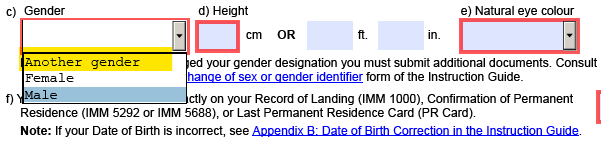
Lesbians and gay men spent decades going to court asking to be left alone — asking for the same rights as everyone else, nothing more. The argument now advanced is that sexual orientation itself is a harm to transgender people; that same-sex attraction, which by definition excludes the opposite sex, is a form of discrimination. This is not progress. This is a rebranding of homophobia.
I have filed complaints, written letters, appeared in courts, and corresponded with two Governors General, a King, and ministers at every level of government. I have not stopped.
What working for the government reduced in me — the capacity to communicate freely, to name what I saw — the passage of gender ideology into law in 2017 threatened to finish off entirely. It has not. Yet. The words are still there. They still mean what they mean. Women have reality on our side, and that is not a small thing. But institutions — medical, legal, governmental — must be held to account for the reality they are choosing to ignore. Write to them. File complaints. Use the mechanisms they have built, and make them justify their failure to use those mechanisms honestly.
This is what I have done. This is what all of us must do.
Nina Tryggvason is a former federal public servant who served in multiple Canadian government departments.

Original self-portrait with stress ball submitted by NT. Wardrobe and background generated with AI.
Read Nina's blogs at Nina's Garden, "Bringing curious compassion to public dialog and to show our commonalities with humour, across what divides us."


Comments